


When Is Wedding Season? Your Complete Guide (Including Off-Peak, Regional Tips, and Data Insights)
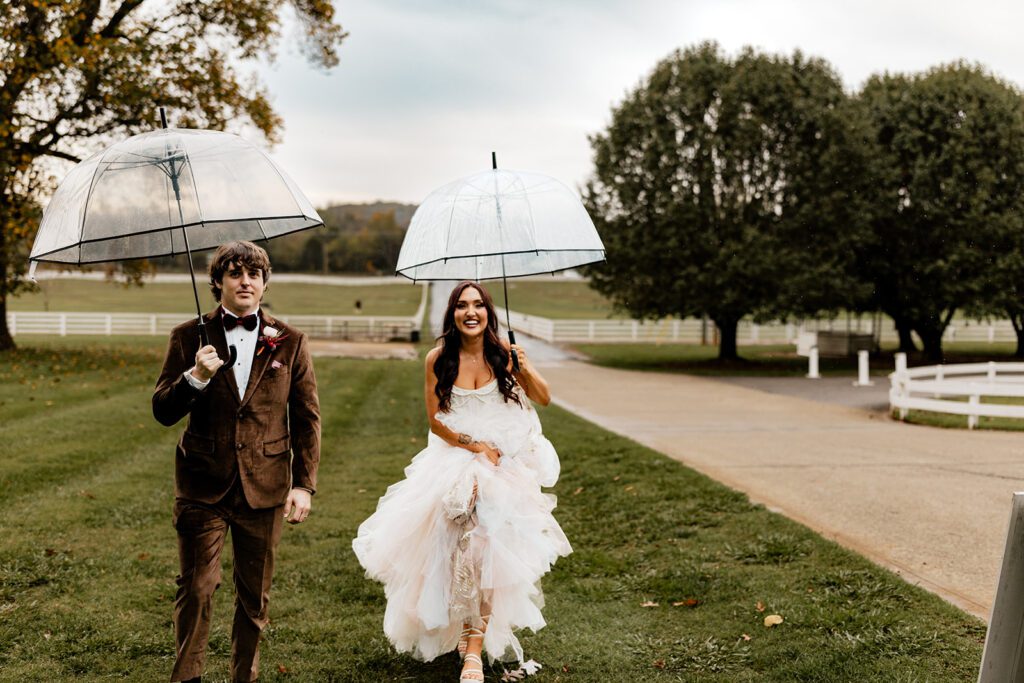
If you’re newly engaged or planning your dream wedding, you may have wondered: “When exactly is wedding season?” The answer isn’t quite as simple as it seems because wedding season varies based on location, climate, budget, and personal preference. In this guide, we’ll cover everything you need to know about peak wedding seasons, off-season advantages, regional nuances across the United States, and data-driven insights from Google Trends and industry reports to help you choose the perfect date.
When is Wedding Season in the U.S.?
Traditionally, wedding season in the U.S. spans late spring through early fall—approximately May to October. Specifically, September and October have become increasingly popular for weddings due to mild weather, beautiful scenery, and the convenience of the fall calendar.
Regional Wedding Seasons: State-by-State Breakdown
While national trends give a good overview, wedding season truly depends on where you live:
- Northeast: Peak months are May through October, avoiding harsh winters and spring rains.
- South: Ideal months are March–May and September–November, avoiding extreme heat and hurricane risks.
- Midwest: Late spring to early fall, May through October, provides temperate weather ideal for outdoor ceremonies.
- West Coast: Typically May–October, with California favoring spring and fall, while the Pacific Northwest sees most weddings in July–September to avoid the rainy season.
- Southwest: Peak season shifts dramatically, with Arizona and New Mexico hosting most weddings from October to March due to milder temperatures.
Off-Peak Wedding Season: Why It Might Be Perfect for You
If flexibility and savings are appealing, consider planning your wedding in the off-season—typically November through March. Here are key benefits:
- Cost Savings: Venues and vendors often provide discounts and special deals during slower months.
- Availability: Higher likelihood of securing popular venues, photographers, and other service providers.
- Unique Experiences: An off-season wedding can offer cozy winter vibes, unique decor themes, and less wedding “fatigue” among guests.
Weather and Seasonal Considerations
When picking your date, weather plays a crucial role:
- Avoiding Hurricane Season: In the Southeast, steer clear of late summer months, particularly August and September.
- Heat Management: Southern states can become uncomfortable for outdoor weddings in July and August. Opt for early spring or late fall.
- Cold Weather: Northeast and Midwest regions can experience harsh winter conditions, potentially complicating travel plans.
Best Days of the Week for Your Wedding
Saturdays are traditional, but weekday weddings (especially Thursday or Friday) can significantly lower costs and improve venue availability, even in peak seasons.
Data Insights: Google Trends and Industry Reports
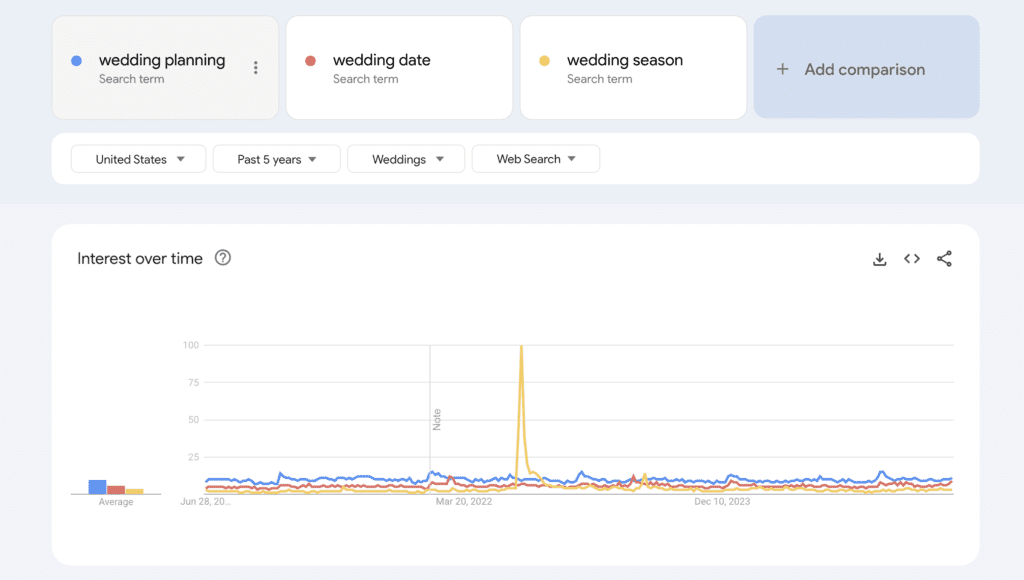
To help you visualize wedding season popularity, we’ve included data-driven insights from Google Trends and industry studies:
According to Google Trends, search interest in “wedding planning,” “wedding date,” and “wedding season” consistently peaks each year during late summer and early fall, particularly in September. This aligns with traditional peak wedding seasons and reflects active planning following holiday engagements.
Source: Google Trends, US, 2020–2025.

Regional interest in wedding planning is notably strong in states like Wyoming, New York, and Montana, suggesting these areas may have robust wedding industries or higher planning activity.
Source: Google Trends, Interest by subregion, 2020–2025.
The Knot’s annual report indicates approximately 40% of weddings occur during the fall months (September and October), whereas only about 5% happen during winter (January through March). This substantial difference emphasizes the popularity and practicality of fall weddings.
Pro Insight: Related rising queries like “Notion wedding planning” and “Google Sheets wedding planning template” suggest couples increasingly rely on digital tools to organize their weddings, offering opportunities for vendors and bloggers to provide or recommend these resources.
Meet Hevesi Journal

Hevesi Journal is our husband‑and‑wife photography and videography studio based in Atlanta—but we happily chase love stories everywhere, from NYC rooftops to mountain ranches.
We blend documentary candor with fine‑art composition so your gallery feels effortless yet editorial. If you’re searching for visual storytellers who hype you up, keep you grounded, and deliver timeless imagery, you’re in the right place.
FAQ: Common Questions About Wedding Season
Typically, May through October in most U.S. regions.
Off-season generally runs from November through March.
California enjoys a longer season (April–November) due to milder weather, while New York’s season is primarily May–October, avoiding winter conditions.
California enjoys a longer season (April–November) due to milder weather, while New York’s season is primarily May–October, avoiding winter conditions.
Typically, January, February, and March.
Final Thoughts
Choosing the best time for your wedding involves balancing weather, budget, personal preferences, and now, data-driven insights. Whether it’s a sunny September wedding or a cozy January ceremony, understanding these nuances will ensure your big day is everything you imagined.
Sources & Further Reading
- Google Trends – U.S. search interest 2020‑2025
- The Knot Real Weddings Study
- WeddingWire – What Is Wedding Season?
- NOAA Climate Data Online
Copyright 2026 Hevesi Journal • All Rights Reserved